Where is the OM in the heart
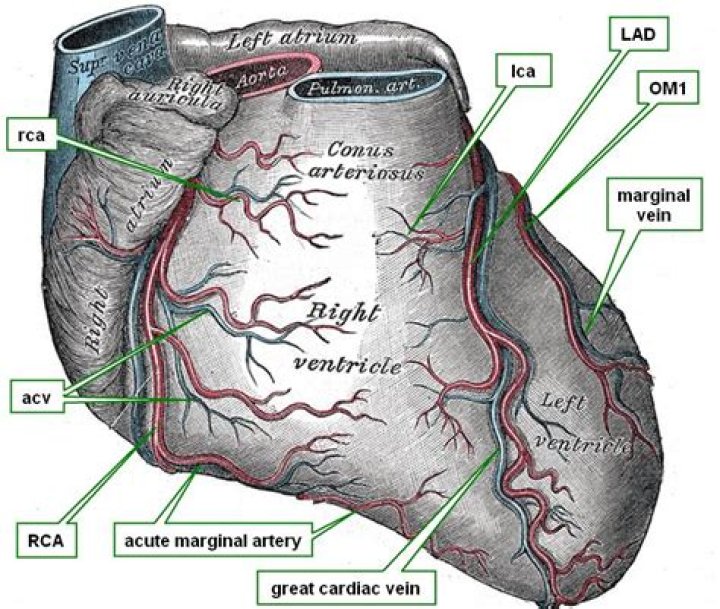
Branches. The circumflex artery curves to the left around the heart within the coronary sulcus, giving rise to one or more left marginal arteries (also called obtuse marginal branches (OM)) as it curves toward the posterior surface of the heart.
Where is the widow maker artery located?
A widow maker is when you get a big blockage at the beginning of the left main artery or the left anterior descending artery (LAD). They’re a major pipeline for blood.
What happens if the left anterior descending artery is blocked?
The widow-maker is a massive heart attack that occurs when the left anterior descending artery (LAD) is totally or almost completely blocked. The critical blockage in the artery stops, usually a blood clot, stops all the blood flow to the left side of the heart, causing the heart to stop beating normally.
Where is the left anterior descending artery located?
The left anterior descending artery (LAD) is the largest coronary artery runs anterior to the interventricular septum in the anterior interventricular groove, extending from the base of the heart to the apex.Where is the anterior interventricular artery?
The left anterior descending artery, preferably known as the anterior interventricular artery (AIV), is the continuing branch of the left coronary artery. It is located subepicardially within the anterior and inferior interventricular sulci of the heart.
What are the warning signs of clogged arteries?
- Chest pain.
- Shortness of breath.
- Heart palpitations.
- Weakness or dizziness.
- Nausea.
- Sweating.
How do I know my heart is failing?
Heart failure signs and symptoms may include: Shortness of breath with activity or when lying down. Fatigue and weakness. Swelling in the legs, ankles and feet.
Which heart artery is the Widowmaker?
A widowmaker is an informal term for a heart attack that involves 100 percent blockage in the left anterior descending (LAD) artery, says Stanley Chetcuti, M.D., an interventional cardiologist at the University of Michigan Frankel Cardiovascular Center.What is the OM artery in the heart?
The obtuse marginal (OM) arteries sometimes referred to as lateral branches are branch coronary arteries that come off the circumflex artery. There can be one or more obtuse marginal arteries. It typically traverses along the left margin of heart towards the apex.
What are the 3 main heart arteries?- Right marginal artery.
- Posterior descending artery.
Is a blocked circumflex artery serious?
In less than half of people, it may also supply blood to the sinoatrial nodal artery. With anomalous coronary arteries, the circumflex artery or others may be deformed at birth. Such a defect can present a great danger to the child (especially if taking part in aerobic sports) as it can increase risk for heart failure.
Can you Stent a 100% blocked artery?
“Patients typically develop symptoms when an artery becomes narrowed by a blockage of 70 percent or more,” says Menees. “Most times, these can be treated relatively easily with stents. However, with a CTO, the artery is 100 percent blocked and so placing a stent can be quite challenging.”
Why is it called the Widowmaker?
The “widowmaker” is an expression describing the complete closure of the left anterior descending (LAD) coronary artery. The LAD is an essential coronary artery and its occlusion can result in immediate death, hence the name.
What are the 4 main arteries of the heart?
The right coronary artery, the left main coronary, the left anterior descending, and the left circumflex artery, are the four major coronary arteries. Blockage of these arteries is a common cause of angina, heart disease, heart attacks and heart failure.
What are the 5 main arteries of the heart?
- Left coronary artery (LCA) Left anterior descending artery. Left circumflex artery. Posterior descending artery. Ramus or intermediate artery.
- Right coronary artery (RCA) Right marginal artery. Posterior descending artery.
Where do most heart blockages occur?
The arteries in the heart (coronary arteries), neck (carotid arteries) and the legs are affected most often. A plaque can also break apart. If this happens, a blood clot (thrombus) forms at the break and blocks blood flow. Or the blood clot can move through the bloodstream, blocking blood flow to organs.
What are the 4 stages of heart failure?
There are four stages of heart failure – stage A, B, C and D – which range from high risk of developing heart failure to advanced heart failure.
How can I make my heart healthy?
- Eat healthy.
- Get active.
- Stay at a healthy weight.
- Quit smoking and stay away from secondhand smoke.
- Control your cholesterol and blood pressure.
- Drink alcohol only in moderation.
- Manage stress.
Is chocolate good for heart?
Most dark chocolate is high in flavonoids, particularly a subtype called flavanols that is associated with a lower risk of heart disease. Some studies suggest chocolate or cocoa consumption is associated with a lower risk of insulin resistance and high blood pressure in adults.
Can Apple cider vinegar clean out your arteries?
Although we’re not sure where this claim originated from, we do know there is no scientific evidence proving apple cider vinegar clears clogged arteries. In fact, vinegar should not be substituted for standard treatment.
Can an ECG detect a blocked artery?
An ECG Can Recognize the Signs of Blocked Arteries. Unfortunately, the accuracy of diagnosing blocked arteries further from the heart when using an ECG decrease, so your cardiologist may recommend an ultrasound, which is a non-invasive test, like a carotid ultrasound, to check for blockages in the extremities or neck.
How do you unclog your chest arteries?
- Add more good fats to your diet. Good fats are also called unsaturated fats. …
- Cut sources of saturated fat, such as fatty meat and dairy. Choose lean cuts of meat, and try eating more plant-based meals.
- Eliminate artificial sources of trans fats. …
- Increase your fiber intake. …
- Cut back on sugar.
Is 70 blockage in artery bad?
Severe heart blockage is typically that in the greater than 70% range. This degree of narrowing is associated with significantly reduced blood flow to the heart muscle and can underlie symptoms such as chest pain and shortness of breath.
How do you clear clogged arteries without surgery?
Through angioplasty, our cardiologists are able to treat patients with blocked or clogged coronary arteries quickly without surgery. During the procedure, a cardiologist threads a balloon-tipped catheter to the site of the narrowed or blocked artery and then inflates the balloon to open the vessel.
Can you live with heart blockage?
According to the Centers for Disease Control and Prevention (CDC), around one-half of all people diagnosed with congestive heart failure will survive beyond five years.
How long does a stent last?
How long will a stent last? It is permanent. There is just a 2–3 per cent risk of narrowing coming back, and if that happens it is usually within 6–9 months. If it does, it can potentially be treated with another stent.
How do you check for Widowmaker arteries?
You can prevent the widowmaker by making key lifestyle changes (and we’ll get to those) but the best way to get checked is with a regular cardiac scan to assess your coronary calcium score. This test assesses the amount of calcium deposits in the heart and a high score may indicate a potential plaque build up.
What happens if three arteries are blocked?
A buildup of plaque can narrow these arteries, decreasing blood flow to your heart. Eventually, the reduced blood flow may cause chest pain (angina), shortness of breath, or other coronary artery disease signs and symptoms. A complete blockage can cause a heart attack.
What is the largest artery in the body?
Aorta Anatomy The aorta is the large artery that carries oxygen-rich blood from the left ventricle of the heart to other parts of the body.
What happens if the coronary artery is blocked?
When one or more of the coronary arteries suddenly becomes completely blocked, a heart attack (injury to the heart muscle) may occur. If the blockage occurs more slowly, the heart muscle may develop small collateral blood vessels (or detours) for other coronary arteries to reroute the blood flow, and angina occurs.
What would happen if the circumflex artery get blocked?
Background. Occlusion of the circumflex artery (Cx) often does not present signs in the ECG. It can lead to delayed angiography during ST-elevation myocardial infarction (STEMI).