What is the structure of ADP
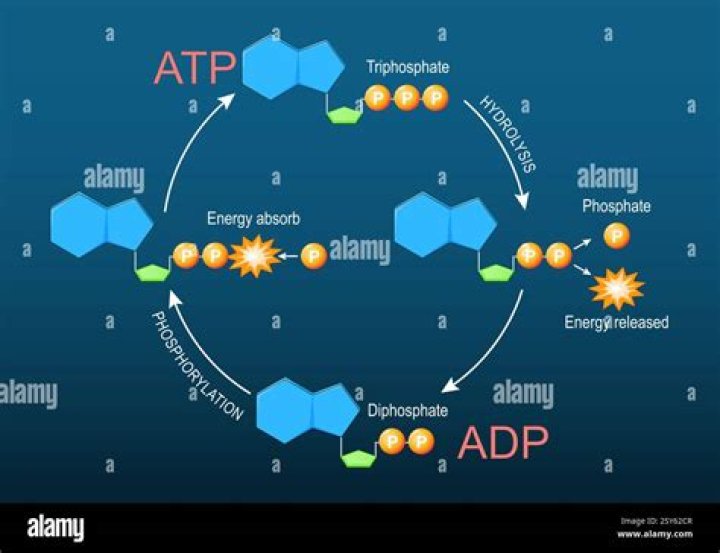
Structure. Adenosine diphosphate (ADP) is a nucleoside phosphate comprised of a ribonucleoside and two phosphate groups. It means it has a ribose as its sugar and two phosphate groups attached. Its nucleoside contains a purine base, i.e. an adenine attached to the ribose sugar.
What is structure of ADP in biology?
Structure. Adenosine diphosphate (ADP) is a nucleoside phosphate comprised of a ribonucleoside and two phosphate groups. It means it has a ribose as its sugar and two phosphate groups attached. Its nucleoside contains a purine base, i.e. an adenine attached to the ribose sugar.
How do ATP and ADP differ structurally?
Explanation: Adenosine triphosphate, ATP , has three phosphate groups, hence the name with “tri-“. Adenosine diphosphate on the other hand, ADP , has only two phosphate groups, and so has the prefix “di-“. So, ATP has one extra phosphate group than ADP .
What is the basic structure of ATP ADP?
ATP is a nucleotide that consists of three main structures: the nitrogenous base, adenine; the sugar, ribose; and a chain of three phosphate groups bound to ribose. The phosphate tail of ATP is the actual power source which the cell taps.What is the structure of an ATP molecule?
The structure of ATP is a nucleoside triphosphate, consisting of a nitrogenous base (adenine), a ribose sugar, and three serially bonded phosphate groups. ATP is commonly referred to as the “energy currency” of the cell, as it provides readily releasable energy in the bond between the second and third phosphate groups.
What is ADP in biology class 10?
ADP stands for adenosine diphosphate, and it’s not only one of the most important molecules in the body, but it’s also one of the most numerous. ADP is an ingredient for DNA, it’s essential for muscle contraction and it even helps initiate healing when a blood vessel is breached.
What is ADP in biology quizlet?
Adenosine Diphosphate. ADP (definition) molecule that ATP becomes when it gives up one of its three phosphate groups. Thylakoids. A flattened membrane sac inside the chloroplast, used to convert light energy to chemical energy.
How is the structure of ATP related to its function?
It allows the cell to store energy briefly and transport it within the cell to support endergonic chemical reactions. The structure of ATP is that of an RNA nucleotide with three phosphates attached. As ATP is used for energy, a phosphate group or two are detached, and either ADP or AMP is produced.What is ADP in a cell?
If a cell needs to spend energy to accomplish a task, the ATP molecule splits off one of its three phosphates, becoming ADP (Adenosine di-phosphate) + phosphate. The energy holding that phosphate molecule is now released and available to do work for the cell. … When it’s run down, it’s ADP.
Which structure is responsible for the synthesis of ATP?The mitochondrion is referred to as the ‘power house’ of the cell, because it is responsible for the synthesis of the majority of ATP under aerobic conditions. The inner membrane of the mitochondrion contains the components of the electron transport chain.
Article first time published onWhat type of macromolecule is ADP?
Explanation: ATP molecule (C10H16N5O13P3) and ADP molecule (C10H16N5O13P2) are macromolecules containing phosphorus. They are very important in photosynthesis.
What is the structural difference between ATP and ADP quizlet?
What is the structural difference between ATP and ADP? ADP has two phosphates while ATP has three.
How many ribose molecules are in ADP?
An ATP (adenosine triphosphate) molecule is made up of one ribose molecule, one adenine molecule, and three phosphate groups joined.
How are ATP and ADP related?
ATP is a nucleotide consisting of an adenine base attached to a ribose sugar, which is attached to three phosphate groups. … When one phosphate group is removed by breaking a phosphoanhydride bond in a process called hydrolysis, energy is released, and ATP is converted to adenosine diphosphate (ADP).
How does the structure of ATP make it an ideal source of energy for the cell?
ATP’s structure makes it an ideal energy source because it is like a rechargeable battery that releases energy by breaking the bond of one of its phosphates and stores energy by forming bonds with new phosphates. … ATP is like a fully charged battery while ADP is like a partially charged battery.
What is ADP made of quizlet?
What is ADP? Short for adenosine diphosphate. An organic compound that is composed of adenosine and two phosphate groups. With the addition of another phosphate group, it is converted to ATP for the storage of energy during cell metabolism.
What 4 components make up an ADP molecule?
Part 2: ATP Decomposition When a cell requires energy, it breaks off the last (3rd) phosphate group from the ATP molecule, which releases energy. The molecule that is left over is called adenosine diphosphate (ADP) which consists of adenine, ribose sugar, and TWO phosphate groups. ADP contains less energy than ATP.
What three components make up ADP and ATP?
Adenine, Ribose, and three Phosphate groups.
What is the full form of ADP and ATP?
ATP– Adenosine triphosphate. ADP – Adenosine diphosphate. NaDP- Nicotinamide adenine dinucleotide phosphate.
What is the full form of ADP and ATP in biology?
ADP – Adenosine diphosphate. Adenosine triphosphate (ATP) is a measure of the energy of a cell. It is formed by a phase in which the ADP molecule accepts an inorganic phosphorus molecule. Adenosine triphosphate (ATP) = Adenosine diphosphate (ADP) + Inorganic phosphorus molecule.
What is ADP in respiration?
ATP (adenosine triphosphate) is the energy-carrying molecule used in cells because it can release energy very quickly. … Once ATP has released energy, it becomes ADP (adenosine diphosphate), which is a low energy molecule. ADP can be recharged back into ATP by adding a phosphate. This requires energy.
Is ADP a neurotransmitter?
Adenosine (ADO), a non-classical neurotransmitter and neuromodulator, and its metabolites adenosine triphosphate (ATP), adenosine diphosphate (ADP) and adenosine monophosphate (AMP), have been shown to play an important role in a number of biochemical processes.
How is ADP made?
ADP is generated by the de-phosphorylation of ATP. ADP (adenosine diphosphate) and ATP (adenosine triphosphate) are two energy storehouses in a cell. They both have similar components except that ADP has two phosphate groups attached to the nucleoside and ATP has three phosphate groups.
What is it about the structure of ATP that contributes to its ability to act as an energy currency?
What is it about the structure of ATP that contributes to it’s ability to act as an energy currency? The bond between the 2nd and 3rd phosphate makes ATP unstable. Exergonic reactions release free energy when a phosphate leaves. In photosynthesis, what are the two major reactions that take place?
How does the structure of the ATP molecule relate to the large amounts of free energy it contains?
This displacement from equilibrium means that the hydrolysis of ATP in the cell releases a large amount of free energy. Two phosphoanhydride bonds (those that connect adjacent phosphates) in an ATP molecule are responsible for the high energy content of this molecule.
Which structure is responsible for the passage of materials into and out of the cell *?
Cell membrane Every cell in the body is enclosed by a cell (Plasma) membrane. The cell membrane separates the material outside the cell, extracellular, from the material inside the cell, intracellular. It maintains the integrity of a cell and controls passage of materials into and out of the cell.
What is the mitochondria structure?
Mitochondria have an inner and outer membrane, with an intermembrane space between them. The outer membrane contains proteins known as porins, which allow movement of ions into and out of the mitochondrion. The inner membrane contains a variety of enzymes. …
Which cell structure is mainly responsible for releasing energy?
Which cell structure is mainly responsible for releasing energy from food molecules in some single-celled organisms? Explanation: Mitochondria produce energy through cellular respiration, they use glucose extracted from food in order to form ATP.
Which macromolecule has sulfur?
Proteins are very large molecules made of carbon, hydrogen, oxygen, nitrogen, and sometimes sulfur. Protein molecules are made of smaller molecules called amino acids.
Which structure ATP or ADP contains more energy?
Which molecule below has more stored chemical energy? Yes. ATP, with its three phosphate groups, has more stored chemical energy than does ADP.
How are ADP and ATP similar and different?
ATP is a high energy molecule which has three phosphate groups attached to a ribose sugar. ADP is a somewhat similar molecule composed of the same adenine and ribose sugar with only two phosphate molecules. The key difference between ATP and ADP is the number of phosphate groups they contain.