What is buprenex used for in dogs
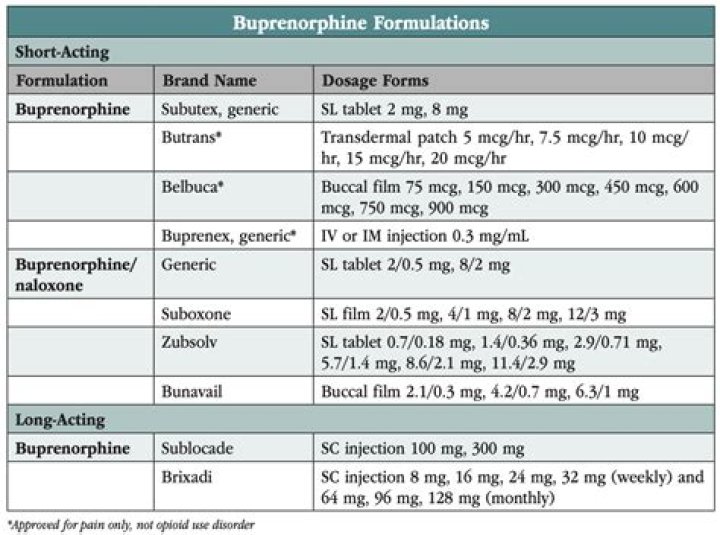
Buprenorphine (brand names: Buprenex®, Simbadol®, Belbuca®, Vetergesic®, Buprenodale®, Sublocade®, Suboxone®, Subutex®, Temgesic®) is an opioid analgesic used to treat pain, or is used as a preanesthetic in the hospital or clinic setting.
How long does Buprenex stay in a dog's system?
Why Buprenorphine Is Prescribed in Veterinary Medicine It is a popular drug of choice because it very effective and fast-acting. After being injected, buprenorphine is rapidly absorbed with the effects usually felt within 15 to 30 minutes and lasting about 8 hours.
How long does dog buprenorphine last?
The buprenorphine in Simbadol® has been treated so that one dose can be expected to last for 24 hours.
How quickly does Buprenex work?
Buprenex is a partial opioid agonist, which is administered in a hospital setting by injection into the muscle or intravenously. Pain relief will begin in as little as 15 minutes after the injection and the effects will last approximately 6 hours.How much Buprenex Can I give my dog?
The volume and expense of buprenorphine at 0.12 mg/kg becomes prohibitive in anything but the smallest dogs and though I do occasionally prescribe OTM buprenorphine in dogs for outpatient analgesia, I typically start with a lower dose (maybe 0.04 – 0.05 mg/kg) and then try to gauge the animal’s response, increasing if …
How often can you give a dog buprenorphine?
Dogs and Cats: Buprenorphine is usually given orally to dogs and cats up to three times daily for relief of pain. Do not give your pet aged cheese or use tick collars while on this drug.
Is buprenex safe for dogs?
Buprenorphine should be used cautiously in pets with low thyroid levels, liver disease, bile disease, heart and/or lung disease, kidney disease, Addison’s disease, or in very young, very old, or debilitated pets. It should be used with extreme caution in pets with head trauma or other nervous system dysfunction.
What are side effects of buprenorphine?
- headache.
- stomach pain.
- constipation.
- difficulty falling asleep or staying asleep.
- mouth numbness or redness.
- tongue pain.
- blurred vision.
- back pain.
Does buprenex contain naloxone?
Naloxone is also used with buprenorphine, the active drug in Buprenex, to help treat opioid dependence. (Opioid dependence means that you need an opioid drug to function well.) Combination products that contain naloxone and buprenorphine include: Zubsolv, which is a tablet that you place under your tongue (sublingual)
Is buprenex a controlled substance?BUPRENEX contains buprenorphine, a Schedule III controlled substance. As an opioid, BUPRENEX exposes users to the risks of addiction, abuse, and misuse. Although the risk of addiction in any individual is unknown, it can occur in patients appropriately prescribed BUPRENEX.
Article first time published onWhat is buprenorphine used for?
Buprenorphine is an opioid medication. Buprenorphine oral/sublingual (given under the tongue) is used to treat opioid addiction. Other forms of buprenorphine are used to treat moderate to severe pain. Buprenorphine sublingual is not for use as a pain medication.
Can a dog have pancreatitis without symptoms?
Chronic Pancreatitis A chronic condition is one that has developed over time, slowly, and often without symptoms. This condition can result from repeated bouts of acute pancreatitis. Both acute and chronic forms can be either severe or mild, and both result in pain.
Is buprenorphine used to treat pain?
Buprenorphine (Belbuca) is used to relieve severe pain in people who are expected to need pain medication around the clock for a long time and who cannot be treated with other medications. Buprenorphine (Belbuca) should not be used to treat pain that can be controlled by medication that is taken as needed.
Is buprenex the same as buprenorphine?
Buprenex is the brand name for an injectable form of buprenorphine, an opiate medication used for pain.
How often can I give my dog meloxidyl?
Dosage and Administration Meloxidyl Oral Suspension should be administered initially at 0.09 mg/lb (0.2 mg/kg) body weight only on the first day of treatment. For all treatments after day 1, Meloxidyl Oral Suspension should be administered once daily at a dose of 0.045 mg/lb (0.1 mg/kg).
Does buprenorphine go bad?
The FDA drug approval of buprenorphine/naloxone (Suboxone) is for 12 months. … Buprenorphine/naloxone (Suboxone) should be stored at room temperature, at about 77°F (25°C), and protected from moisture and prolonged exposure to light. As with all medicines, keep them out of the reach of children.
Does buprenex cause constipation in dogs?
Severe constipation. As with all opioids, severe constipation can be a serious side effect of Buprenex. However, this is not a common side effect of the drug.
What does gabapentin do for a dog?
Gabapentin is an anticonvulsant and analgesic drug that is commonly prescribed by veterinarians to treat seizures, pain, and anxiety in dogs.
Is Buprenorphine the same as tramadol?
Discussion: Tramadol has good efficacy in detoxification and relapse prevention in patients with moderate level of opioid dependence as compared to buprenorphine, Whereas Buprenorphine is better for maintenance treatment and is of higher clinical utility in severe level of opioid dependence where maintenance therapy is …
Is Buprenorphine the same as methadone?
Efficacy of opioid replacement therapies Nonetheless, buprenorphine was equivalent to methadone in ameliorating severity of opioid withdrawal but symptoms may resolve more quickly, and there was a trend toward greater completion of treatment relative to methadone (relative risk = 1.3, P value = 0.08).
Can you overdose on buprenex?
In serious cases, misuse of Buprenex can result in overdose or death. Your doctor will monitor your risk for addiction and misuse before and during your Buprenex treatment. Life threatening respiratory depression. Taking Buprenex can lead to life threatening respiratory depression (weak, shallow, or slow breathing).
Can buprenorphine cause liver damage?
The severity of liver injury attributed to buprenorphine has ranged from mild-to-severe hepatitis, and fatal instances have been reported.
Can buprenorphine cause sedation?
Side effects associated with the use of Buprenorphine, include the following: Sedation. Dizziness. Headache.
What drugs interact with buprenorphine?
- Acetylsalicylic Acid (aspirin)
- Adderall (amphetamine / dextroamphetamine)
- Benadryl (diphenhydramine)
- Combivent (albuterol / ipratropium)
- Cymbalta (duloxetine)
- Fish Oil (omega-3 polyunsaturated fatty acids)
- Klonopin (clonazepam)
- Lexapro (escitalopram)
Is buprenex an antibiotic?
Buprenex is a prescription medicine used to treat the symptoms of Moderate-to-Severe Pain. Buprenex may be used alone or with other medications. Buprenex belongs to a class of drugs called Opioid Analgesics; Analgesics, Opioid Partial Agonist.
Is buprenorphine an antibiotic?
Buprenorphine is a prescription opioid medication. It’s a powerful pain reliever that’s also used to treat opioid use disorder (OUD).
Is there a generic for buprenex?
Hikma is releasing buprenorphine hydrochloride injection, in a dosage strength of 0.3mg/mL. The product is the generic of Reckitt Benckiser Healthcare’s Buprenex.
What color is stool with pancreatitis?
Chronic pancreatitis, pancreatic cancer, a blockage in the pancreatic duct, or cystic fibrosis can also turn your stool yellow. These conditions prevent your pancreas from providing enough of the enzymes your intestines need to digest food.
Do dogs with pancreatitis drink a lot of water?
A pet with pancreatitis will exhibit some or all of the following signs: lack of appetite, frequent vomiting and diarrhea which may contain blood. A pet may also drink more water than usual and vomit it soon after consumption.
What foods trigger pancreatitis in dogs?
Acute pancreatitis can occur after a dog eats a fatty food such as pork, beef, and some other human foods. Dogs that get into garbage can develop pancreatitis. Pancreatitis can also have other causes, including certain medications and some viral or bacterial infections.
What is the strongest pain killer?
Morphine. Morphine and morphine-like drugs (such as oxycodone, fentanyl and buprenorphine) are the strongest painkillers there are.