Is Ringbone in horses genetic
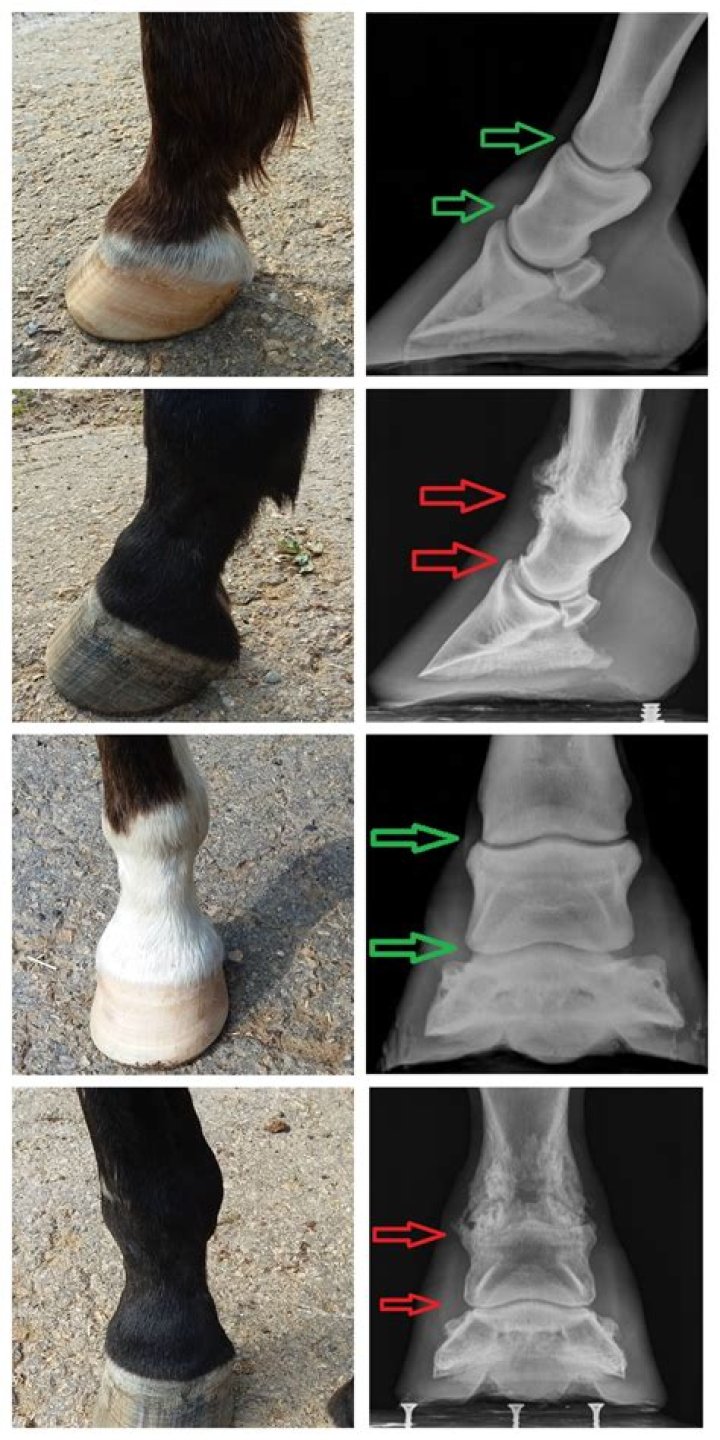
Articular or “true” ringbone occurs around a joint and is usually genetic in origin.
What causes horse ringbone?
What causes Ringbone. Bony proliferation accumulating over time on the coffin and/or pastern joints causes ringbone. As with other types of arthritis, signs typically appear when horses reach middle age. Depending on conformation and use, some horses seem to be more predisposed to this condition.
Is sidebone in horses hereditary?
The main causes of sidebone are hoof concussion, repetitive motion injury, imbalances caused by conformation faults, and improper trimming and shoeing. … Some horses appear to have a hereditary predisposition to sidebone because of conformation.
Can you ride a horse with ringbone?
If you have a horse that has ringbone, be diligent in her care to help her be as comfortable and as serviceable as possible, and remember it may not be the end of her career. It may be just a change in riding and the two of you could have many years of riding pleasure together to come.Is ringbone the same as arthritis?
Ringbone is similar to arthritis, with the growth of additional bone and a gradual breakdown of the joint surface (degeneration). Ringbone can also be characterized by which part of the joint it affects: Articular ringbone affects the lining (synovium) and cartilage of the joint.
What is equine clubfoot?
Club foot refers to a tendon flaw that causes the hoof to be very upright. Often, club foot affects both front legs with one being more severe than the other. Club foot can occur before or after birth in foals. After birth foals acquire club feet when the bones grow faster than the tendons.
What is the difference between ringbone and Sidebone?
Ringbone usually affects both forelimbs, though lameness may be more severe in one hoof than in the other. … Sidebone can be caused by the same conformation faults (particularly, a heavy horse with small feet) and types of strain as ringbone. Trauma such as a kick can also cause inflammation that leads to sidebone.
How do you treat Sidebone in horses?
How can sidebones be treated? Fit a flat, wide-webbed shoe, with a rolled toe, wide at the quarters and heels and extending beyond the ground surface at the heels, to support the heel and encourage expansion. No nails should be used behind the mid-quarters. The horse should have an extended period of rest (6-8 weeks).What are curbs in horses?
Curb is a term used to describe a number of soft-tissue injuries that cause swelling on the distal plantar aspect of the tarsus.
What does previcox do for horses?Previcox is used for a relief of pain and inflammation associated with osteoarthritis, soft-tissue, orthopaedic and dental surgery in dogs and for the alleviation of pain and inflammation associated with osteoarthritis and reduction of associated lameness in horses.
Article first time published onWhat is side bone called?
Sidebone is a common condition of horses, characterized by the ossification of the collateral cartilages of the coffin bone. These are found on either side of the foot protruding above the level of the coronary band. … The front feet are most commonly affected.
What is a Sidebone shoe?
Sidebone is ossification of the collateral cartilages of the distal phalanx (coffin bone) and occurs most often in the lateral cartilages. … A sidebone shoe reduces leverage and allows sinking into the affected side. The best application involves including a thick pad to reduce concussion to the affected structures.
When is it time to euthanize a horse with arthritis?
A horse should be euthanized when they are facing severe suffering due to any type of medical condition, you lack sufficient finances to provide the necessary treatments your horse needs to be relieved of misery, and a horse consistently displays behavioral issues that place the lives of others at high risk.
Can you jump a horse with Sidebone?
Yes, usually, but it may depend on the horse and the amount of jumping it does. Side bone is more common in heavy horses (warm bloods, draft horses) and in these horses it’s usually not an issue. If a lighter horse has side bone, it can more readily cause issues.
Can a horse recover from Sidebone?
Recovery of Sidebone in Horses Recovery from sidebone is guarded, especially in cases where lameness has presented or there is excessive ossification in the collateral cartilages as well as hoof deformity.
What is Sweeney in horses?
“Shoulder Sweeney refers to an injury of the suprascapular nerve, which runs over the front part of the scapula and provides the nerve supply to two major muscles that support the shoulder joint,” Watkins said. …
Is clubfoot hereditary?
Clubfoot is considered a “multifactorial trait.” Multifactorial inheritance means there are many factors involved in causing a birth defect. The factors are usually both genetic and environmental.
Is clubbed feet hereditary in horses?
John Foster Lasley, PhD and author of Genetic Principles in Horse Breeding, discovered that the gene for club feet is recessive, meaning that both sire and dam must have the gene in order for it to be passed along to the foal. The chances are one in four that the foal will receive the gene.
Can you ride a horse with clubfoot?
Probably not. At least not for your horse, your farrier assures you later. Attentive trimming is keeping him sound, his gaits are comfortable to ride, he carries you happily over the trails, and he has always been able to do whatever you have asked of him. In fact, he may even be able to do more.
What is sickle hock in horses?
A sickle-hocked leg structure is one in which the back leg joints of an animal, usually a horse or other equine mammal, are set with too much angle, resulting in the hock also being excessively angled. This can result in uneven hoof wear, which is incredibly painful for the affected horse.
What is a capped hock on a horse?
A capped hock represents a swelling over the point of the horse’s hock (tarsus). If you look at your horse from the side, the point of the hock is located on the back of the hock where the tendons turn the corner and then head down the lower leg.
What is a false curb?
False curb Often mistaken for a real curb, but something else entirely. There’s no soft-tissue swelling and it should disappear when the hindleg is lifted. But it’s a conformation fault, which occurs when the head of the splint bone is enlarged.
What are the signs of navicular in horses?
Clinical signs of navicular disease include a short, choppy stride with lameness that worsens when the horse is worked in a circle, as when longeing. Frequent stumbling may occur at all gaits, even the walk, or when horses are asked to step over short obstacles such as ground poles.
Is Previcox legal for horses?
At a dose of 0.1 mg/kg, Previcox seems to be efficacious in horses. But despite its efficacy, the FDA standards dictate that Previcox is illegal to prescribe or dispense for horses because an approved drug for horses, Equioxx, already exists.
Can vets prescribe Previcox for horses?
Veterinary Regulations While equine veterinarians always want to see their patients treated with effective AND cost-effective medication, we are prohibited to prescribe Previcox to equine patients due to specific FDA and AVMA law.
Can Previcox be used long term?
PREVICOX (firocoxib) is Safe When Used as Recommended and Approved for Long-Term Use in Dogs with OA. Other adverse reactions based on post-approval experience have been reported.
What cushions the ends of bones at their joints?
Cartilage is a type of firm, thick, slippery tissue that coats the ends of bones where they meet with other bones to form a joint. Cartilage acts as a protective cushion between bones.
How much does horse euthanasia cost?
The average cost of having a horse humanely euthanized by a veterinarian and its body disposed of is approximately $250 – a virtual drop in the bucket when it comes to the overall expense of keeping a horse. This cost is simply a part of responsible horse ownership.
Do horses feel pain when euthanized?
However, the final moments of your horse’s life can be just as comforting for both of you if you do your normal routine and show them affection and love right up until they are euthanized. … This also means, however, that your horse is not aware of any discomfort or pain as life leaves their body.
Should I be there when my horse is put down?
Unless the horse is already down or the vet can safely lay them down for you… a horse is usually standing. … So, the rules that you may apply to yourself for being present until the absolute end with a small animal – may not be safe for you with your horse.
How does Sidebone affect a horse?
You may have heard of horses having sidebone before, but what exactly is it? Just above the coronary band on the inside and the outside of your horse’s pastern is a piece of firm but flexible tissue called the lateral cartilage. It supports the hoof wall and cushions the heel during weight bearing.