Is it true that both chloroplasts and mitochondria are enclosed by two membranes
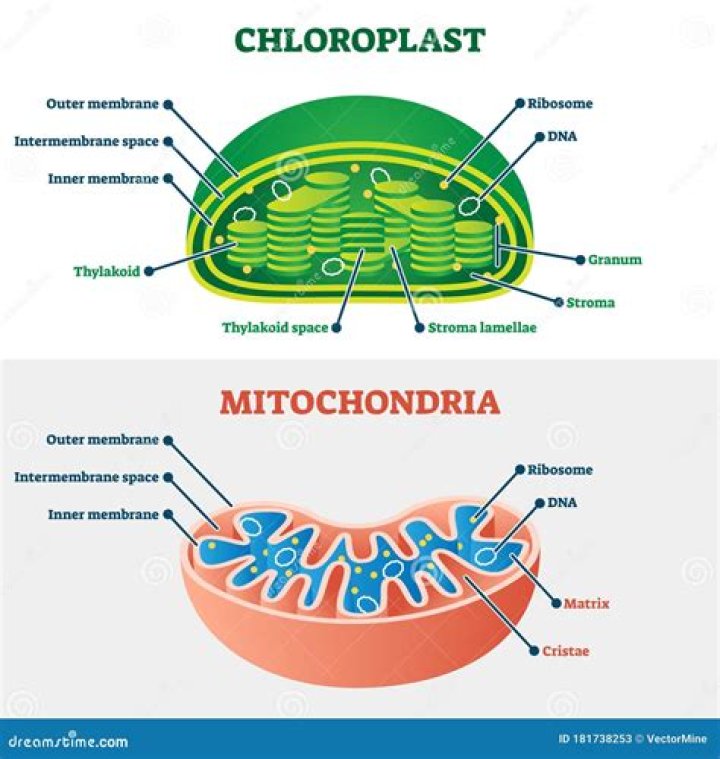
Besides the nucleus, two other organelles — the mitochondrion and the chloroplast — play an especially important role in eukaryotic cells. These specialized structures are enclosed by double membranes, and they are believed to have originated back when all living things on Earth were single-celled organisms.
Do mitochondria and chloroplasts have two membranes?
Like mitochondria, chloroplasts are surrounded by two membranes. The outer membrane is permeable to small organic molecules, whereas the inner membrane is less permeable and studded with transport proteins.
Why do chloroplasts and mitochondria both have double membranes?
The double membrane found in mitochondria and chloroplasts appears to be a relic of the absorption of the prokaryotic bacteria by the eukaryotic host cells. The inner membrane, which now contains numerous folds, apparently came from the bacterial membrane, while the outer membrane came from the host cell itself.
Is a mitochondria enclosed by two membranes?
As previously mentioned, mitochondria contain two major membranes. The outer mitochondrial membrane fully surrounds the inner membrane, with a small intermembrane space in between. The outer membrane has many protein-based pores that are big enough to allow the passage of ions and molecules as large as a small protein.What membrane surrounds both mitochondria and chloroplasts?
Plant chloroplasts are large organelles (5 to 10 μm long) that, like mitochondria, are bounded by a double membrane called the chloroplast envelope (Figure 10.13). In addition to the inner and outer membranes of the envelope, chloroplasts have a third internal membrane system, called the thylakoid membrane.
What do mitochondria and chloroplasts both have?
Both mitochondria and chloroplasts contain their own DNA and ribosomes. Why would these organelles need DNA and ribosomes, when there is DNA in the nucleus and ribosomes in the cytosol? Strong evidence points to endosymbiosis as the answer to the puzzle.
What two processes are both mitochondria and chloroplasts involved in?
Consider both function and membrane structure. Both organelles are involved in energy transformation, mitochondria in cellular respiration and chloroplasts in photosynthesis. They both have multiple membranes that separate their interiors into compartments.
What are enclosed in membranes?
The main types of membrane-enclosed organelles present in all eucaryotic cells are the endoplasmic reticulum, Golgi apparatus, nucleus, mitochondria, lysosomes, endosomes, and peroxisomes; plant cells also contain plastids, such as chloroplasts.What are mitochondria enclosed by?
Mitochondria are surrounded by a double-membrane system, consisting of inner and outer mitochondrial membranes separated by an intermembrane space (Figure 10.1). The inner membrane forms numerous folds (cristae), which extend into the interior (or matrix) of the organelle.
What is the inside of mitochondria between the membranes called?The structure of the inner mitochondrial membrane is extensively folded and compartmentalized. … The region between the inner and outer membrane, called the intermembrane space which is largely continuous with the cytosol, and the more sequestered space inside the inner membrane, called matrix.
Article first time published onWhich of the following is true for both chloroplasts and mitochondria?
Which of the following is true concerning both mitochondria and chloroplasts? Both mitochondria and chloroplasts are responsible for predominantly oxidative metabolic processes. Both mitochondria and chloroplasts contain DNA and ribosomes.
How are chloroplasts and mitochondria same and different?
MitochondriaChloroplastKnown as the powerhouse of the cell, it is responsible for energy metabolism and cellular respirationLarger and much more complex than a mitochondrion, it is the site where photosynthesis takes place.
Do both mitochondria and chloroplasts have a nucleus?
– Chloroplasts and mitochondria are prokaryotic. They have their own genes on a small, circular chromosome but no nucleus. This chromosome has little non-coding DNA, similar to those of bacteria. Chloroplasts and mitochondria also make some of their own proteins from their genes.
Are both mitochondria and chloroplasts found in plant cells?
Both plant and animal cells are eukaryotic, so they contain membrane-bound organelles like the nucleus and mitochondria. … Plants and animals are very different on the outside as well as on the cellular level. Both animal and plant cells have. mitochondria, but only plant cells have chloroplasts.
Is mitochondria inside a compartment?
Comprised of at least six compartments: outer membrane, inner boundary membrane, intermembrane space, cristal membranes, intracristal space, and matrix, mitochondria have a complex, dynamic internal structure.
Why do mitochondria have two membranes?
Mitochondria have double membrane because they are the result of endosymbiosis. And nuclear membrane is actually endoplasmic reticulum part. Mitochondria have double membrane because they are the result of endosymbiosis.
What two items does the mitochondria give off?
In mitochondria, this process uses oxygen and produces carbon dioxide as a waste product.
Is enclosed by two membranes?
Besides the nucleus, two other organelles — the mitochondrion and the chloroplast — play an especially important role in eukaryotic cells. These specialized structures are enclosed by double membranes, and they are believed to have originated back when all living things on Earth were single-celled organisms.
Are all cells enclosed by a membrane?
Every cell in the body is enclosed by a cell (Plasma) membrane. The cell membrane separates the material outside the cell, extracellular, from the material inside the cell, intracellular. It maintains the integrity of a cell and controls passage of materials into and out of the cell.
What cells have membrane enclosed?
There are two types of cells based on the presence of cytoplasmic membrane-bound organelles: eukaryotic cell and prokaryotic cell. The presence of membrane-bound organelles characterizes a eukaryotic cell whereas the absence of such characterizes a prokaryotic cell.
What is the difference between inner membrane of mitochondria and chloroplast?
The inner membrane in mitochondria is folded into cristae. The inner membrane in chloroplast forms flattened sacs called thylakoids. Chloroplast has two chambers, thylakoid, and stroma. Mitochondria consume oxygen to provide energy to the cells.
What similarities do mitochondria and chloroplasts share?
What similarities do mitochondria and chloroplasts share? Both membranes-bound organelles have their own DNA and help make energy available to the cell. Describe how the endoplasmic reticulum, mitochondrion, and Golgi apparatus are structurally similar. All are composed of membrane-enclosed chambers.
Which is not true of both mitochondria and chloroplasts?
Statement (a) is not true. Explanation: Chloroplast in a plant cell helps in the synthesis of food(starch), whereas mitochondria helps in the production of energy(ATP). Chloroplast in any way doesn’t produce ATP.
What is not common in both mitochondria and chloroplasts?
Complete solution: The above option which is not common in chloroplasts and mitochondria is that both are present in animal cells.As everyone knows that chloroplast helps in photosynthesis, and photosynthesis always takes place in the plant cells only.
Do both mitochondria and chloroplasts have plasmids?
Mitochondria and chloroplasts have their own DNA carried in plasmid-like structures. … These organelles make their own DNA and synthesize their own proteins independent of the rest of the cell.