How do try catch blocks work
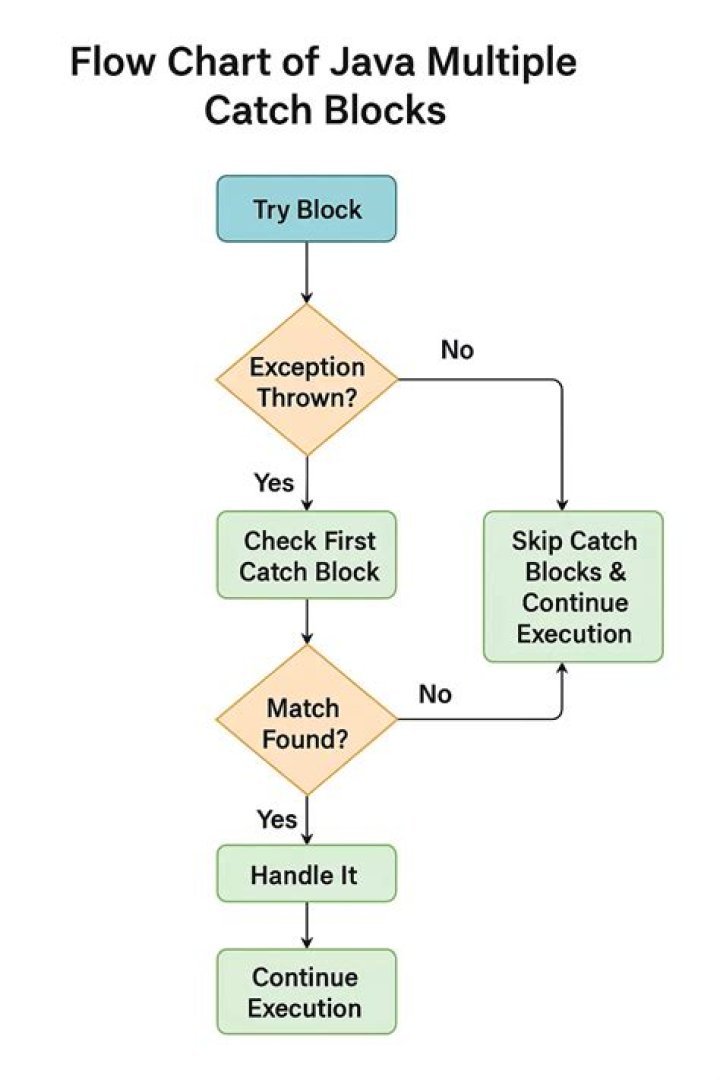
It works like this: First, the code in try {…} is executed. If there were no errors, then catch (err) is ignored: the execution reaches the end of try and goes on, skipping catch . If an error occurs, then the try execution is stopped, and control flows to the beginning of catch (err) .
How try catch blocks work in Java?
Try block. The try block contains set of statements where an exception can occur. A try block is always followed by a catch block, which handles the exception that occurs in associated try block. A try block must be followed by catch blocks or finally block or both.
Are try catch blocks expensive?
try has almost no expense at all. Instead of doing the work of setting up the try at runtime, the code’s metadata is structured at compile time such that when an exception is thrown, it now does a relatively expensive operation of walking up the stack and seeing if any try blocks exist that would catch this exception.
Do try catch blocks hurt performance?
try catch blocks have a negligible impact on performance but exception Throwing can be pretty sizable, this is probably where your coworker was confused. The try/catch HAS impact on the performance. But its not a huge impact.Are try catch blocks bad?
Try/Catch isn’t a bad paradigm. It’s useful for situations where you can’t anticipate how certain errors might happen. No. It is even worse practice to do the error checks before executing the code because it means that you know something about how the implementation of a method works.
Does code after catch get executed?
Code after the try/catch block will not get executed unless the exception is caught by a catch block and not rethrown.
Which statement is true about catch () blocks?
catch block is executed only when exception is found. Here divide by zero exception is found hence both catch and finally are executed.
Does try catch slow down Java?
Effects of try/catch Blocks on Performance Placing try/catch blocks in your Java code can actually slow it down, even when exceptions are not thrown.Is try catch good practice?
No, absolutely not. Use try catch block only where you think there might be an exception at run time. It is not good practice to put all of the code inside try catch block. Not everything only those , are risky code or block off code which are possibly throw exception.
Is try catch expensive Javascript?There’s essentially zero penalty to using try/catch if no exception is thrown. The try-catch block is said to be expensive.
Article first time published onDoes Try Catch affect performance C++?
No instruction related to exception handling is executed until one is thrown so using try / catch doesn’t actually decrease performance.
Is it expensive to throw exceptions?
Since throwing and handling exceptions is expensive, we shouldn’t use it for normal program flows. Instead, as its name implies, exceptions should only be used for exceptional cases.
Why is try catch expensive Java?
Creating and throwing Exception in Java is relatively more expensive due to the requirement of filling stack trace and possible stack unwinding.
Is try catch bad practice Javascript?
try-catch in javascript is just as valid and useful as in any other language that implements them.
Is try catch good practice C++?
No. This is not good programming practice in C++ or in any other language. Silent failures are bad and will bite you sooner or later. If you are going to catch (…) the very least you should do is log that you are doing it.
Does try catch stop execution Javascript?
- First, the code in try {…} is executed.
- If there were no errors, then catch (err) is ignored: the execution reaches the end of try and goes on, skipping catch .
- If an error occurs, then the try execution is stopped, and control flows to the beginning of catch (err) .
Can try block contain loops?
The try{} block can not contain loops or branches.
What should be put in a try block Mcq?
Question 3 Explanation: The statements which may cause problems are put in try block. Also, the statements which should not be executed after a problem accursed, are put in try block.
What is the use of try & catch *?
The try statement allows you to define a block of code to be tested for errors while it is being executed. The catch statement allows you to define a block of code to be executed, if an error occurs in the try block.
Can we write statement after catch block?
Yes, we can write a return statement of the method in catch and finally block.
Does try catch stop execution PHP?
No, once you throw an exception the function execution is stopped (as if you returned some result) and the exception bubbles through the call stack until it finds a catch statement.
How many catch blocks have to be used after try block?
Every try should and must be associated with at least one catch block. Whenever an exception object is identified in a try block and if there are multiple catch blocks then the priority for the catch block would be given based on the order in which catch blocks are have been defined.
Which is better throws or try-catch?
From what I’ve read myself, the throws should be used when the caller has broken their end of the contract (passed object) and the try-catch should be used when an exception takes place during an operation that is being carried out inside the method.
Is try-catch necessary?
It is not necessary to catch all exceptions. In Java there is two types of exceptions: checked and unchecked. The rule is simple a checked exception has to be handled by the caller while an unchecked exception can be handled either by not catching it, or by catching it.
Can catch block write business logic?
Sure, we can write logic inside catch block. However, the code enters in catch block due to exception, right? So, as a part of good coding practice, whenever possible, catch block should be dealing only with handling/re-throwing of exception (e.g. analyzing the exception and logging proper error message etc.)
How do you throw an exception without breaking a for loop in Java?
If you throwing exception – then only way to avoid breaking loop is to catch it immediately. One possibility – move the entire body of the loop into another method which handles the exceptions without re-throwing: e.g.
Does exception handling slow down code?
If not used correctly, exceptions can slow down your program, as it takes memory and CPU power to create, throw, and catch exceptions. … The client code may circumvent the issue by just ignoring exceptions or throwing them.
Is throwing exceptions expensive C#?
Creating an exception object is not necessarily more expensive than creating other regular objects. The main cost is hidden in native fillInStackTrace method which walks through the call stack and collects all required information to build a stack trace: classes, method names, line numbers etc.
When should I use try catch JavaScript?
A try / catch block is basically used to handle errors in JavaScript. You use this when you don’t want an error in your script to break your code.
Should every function have a try catch?
You should use try-catch when appropriate, but please oh please don’t catch all exceptions and not even log it. At that point it’s code smell and shoddy work.
Does try catch slow down python?
Demerits of Python Exception Handling Making use of Python exception handling has a side effect, as well. Like, programs that make use try-except blocks to handle exceptions will run slightly slower, and the size of your code will increase.